Constipation is one of the most common digestive issues people experience today. Many individuals feel embarrassed to talk about it, but ignoring constipation for too long can lead to discomfort and health complications. According to the experts at Apex Multispeciality Hospital, Kalewadi, understanding why constipation happens and recognising it early can help prevent long-term problems.
In this blog, we explain why constipation occurs, what early symptoms you should never ignore, and when it’s important to seek medical help.
What Exactly Is Constipation?
Constipation means difficulty in passing stools or having fewer bowel movements than usual. For some people, it may mean passing hard, dry stools. For others, it may mean going to the toilet only 2–3 times a week.
Normally, when food moves through the intestine, the body absorbs water. But if this movement slows down, too much water gets absorbed, making the stool hard and difficult to pass.
Constipation becomes “chronic” when:
It lasts for several weeks, or
It keeps coming back frequently
At Apex Multispeciality Hospital, doctors often see patients who ignore constipation for months, not realising it may be connected to underlying issues like thyroid imbalance, IBS, or lifestyle habits.
Why Constipation Happens? Most Common Causes?
Constipation is usually a sign that something in your daily routine or digestive system isn’t working properly. Here are the major reasons:
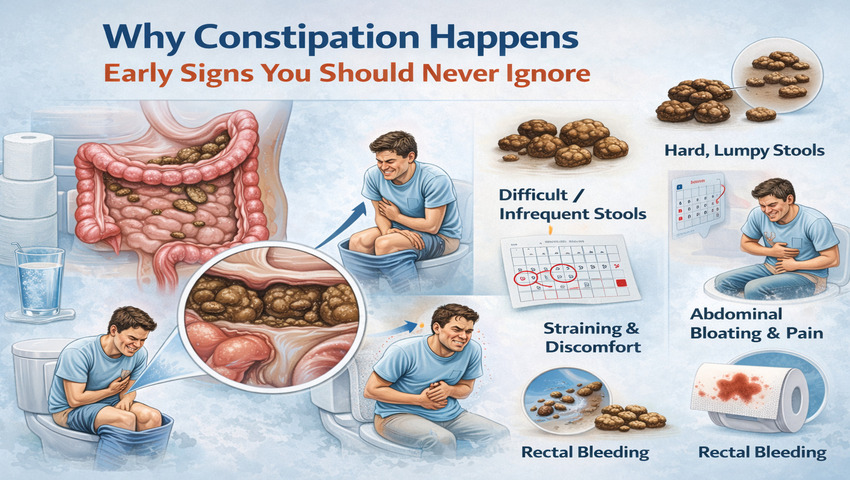
Low-Fibre Diet: Passing stool that feels dry, hard, or like small pebbles is an early symptom.
Reduced Bowel Movements: Going fewer times than your normal pattern indicates a digestive slowdown.
Straining During Toilet: Going fewer times than your normal pattern indicates a digestive slowdown.
Bloating or Stomach Fullness: Gas, heaviness, or tightness in the abdomen are common early signs.
Feeling of Incomplete Evacuation: Even after using the toilet, if you feel the stomach is not empty, constipation may be developing.
Loss of Appetite or Nausea: When the body doesn’t eliminate waste properly, it affects appetite and energy levels.
If these symptoms last more than a week, experts at Apex Multispecialty Hospital recommend a proper check-up.
When Should You See a Doctor?
Constipation becomes serious if:
You experience severe abdominal pain
There is blood in your stool
You lose weight without trying
You have vomiting or constant nausea
Your stool becomes very thin or pencil-shaped
Constipation persists for more than 2–3 weeks
At Apex Multispeciality Hospital, Kalewadi, doctors use advanced diagnostic tools like blood tests, thyroid tests, ultrasound, and colon evaluation to identify the root cause.
Timely care can prevent complications like piles, fissures, and rectal bleeding.
Simple Ways to Prevent Constipation:
Small lifestyle changes can make a big difference:
Add Fiber to Your Diet: Include:
Fruits like papaya, apples, bananas
Vegetables, salads, leafy greens
Whole grains like oats, brown rice, dalia
Drink Enough Water: Aim for 8–10 glasses daily unless your doctor advises otherwise.
Stay Active: A daily 20–30 minute walk helps stimulate bowel movement.
Don’t Delay Using the Toilet: Respond to the urge immediately, especially in the morning.
Reduce Junk and Oily Foods: Processed and fried foods slow digestion.
Manage Stress: Try yoga, meditation, and deep breathing exercises.
At Apex Multispeciality Hospital, dieticians guide patients with personalised diet plans to improve digestion naturally.
How Apex Multispeciality Hospital Helps in Treating Constipation?
Apex Hospital is known for its patient-centric approach and advanced care. Here’s how they help:
Experienced gastroenterologists specialising in digestive health
Modern diagnostic facilities for accurate results
Personalised treatment plans based on the patient’s condition
Diet and lifestyle counselling
Comfortable, supportive environment for all age groups
Whether your constipation is due to lifestyle, medication, or an underlying medical issue, the expert team ensures you receive the right treatment on time.
Conclusion:
Constipation may be common, but it should not be ignored. Early signs like hard stools, bloating, and irregular bowel movements indicate that your digestive system needs attention. While simple lifestyle changes can help, persistent symptoms require proper medical evaluation.
If you or someone you know is struggling with constipation, the gastro specialists at Apex Multispeciality Hospital, Kalewadi offer advanced, reliable, and personalised care.