Do you wake up feeling tired even after getting enough hours of sleep? Does your partner complain about loud snoring or notice that you sometimes stop breathing while sleeping?
These may be more than simple sleep disturbances. They can be signs of sleep apnea, a condition in which breathing repeatedly stops and starts during sleep.
Because sleep apnea can affect oxygen levels, sleep quality and overall health, recognising the warning signs and seeking appropriate medical evaluation is important.
What Is Sleep Apnea?
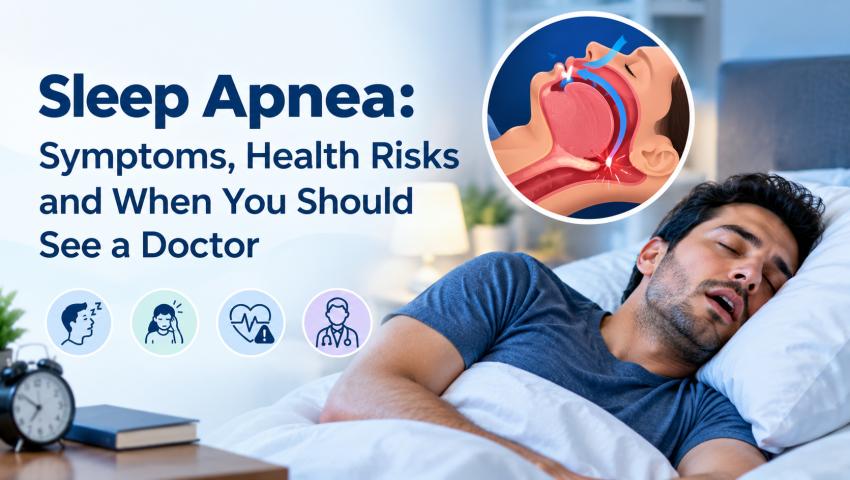
Sleep apnea is a sleep-related breathing disorder in which a person’s breathing becomes repeatedly interrupted during sleep.
The most common type is obstructive sleep apnea (OSA). It occurs when the muscles and tissues in the upper airway relax during sleep and partially or completely block the airway.
Another type, central sleep apnea, occurs when the brain does not send appropriate signals to the muscles responsible for breathing.
What Are the Common Symptoms?
Sleep apnea can sometimes go unnoticed because it occurs while the person is asleep.
Common symptoms include:
Loud or persistent snoring
Pauses in breathing during sleep
Gasping or choking during sleep
Waking up with a dry mouth
Morning headaches
Excessive daytime sleepiness
Difficulty concentrating
Irritability or mood changes
Feeling tired despite adequate sleep
A bed partner may notice breathing pauses or unusual sounds before the affected person realises there is a problem.
Why Does Sleep Apnea Happen?
Several factors can increase the risk of obstructive sleep apnea.
These may include:
Excess body weight
Increased neck circumference
Narrow airway
Enlarged tonsils or other anatomical factors
Increasing age
Family history
Smoking
Alcohol consumption
Certain medical conditions
Children can also develop sleep apnea, particularly when enlarged tonsils or adenoids contribute to airway obstruction.
Is Snoring Always Sleep Apnea?
No. Many people snore without having sleep apnea.
However, loud snoring accompanied by breathing pauses, gasping or excessive daytime sleepiness should not be dismissed.
A healthcare professional can determine whether further evaluation is necessary.
What Happens When Sleep Apnea Is Left Untreated?
Repeated interruptions in breathing can affect sleep quality and oxygen levels.
Over time, untreated sleep apnea may be associated with several health problems, including:
High blood pressure
Cardiovascular problems
Daytime fatigue
Difficulty concentrating
Mood changes
Increased risk of accidents due to excessive sleepiness
People who are excessively sleepy during the day may have difficulty driving or performing tasks that require constant attention.
This makes appropriate diagnosis and treatment important.
How Is Sleep Apnea Diagnosed?
A doctor may first ask about your symptoms, sleep habits, snoring pattern and medical history. A sleep study, also known as polysomnography, may be recommended when sleep apnea is suspected.
Depending on the patient’s situation, testing may be performed in a sleep centre or, in selected cases, using a home sleep apnea test. The results help doctors determine whether sleep apnea is present and how severe it may be.
How Is Sleep Apnea Treated?
Treatment depends on the type and severity of sleep apnea and the patient’s individual health.
1. Lifestyle Changes:
For some people, lifestyle changes can be an important part of treatment.
These may include:
Losing excess weight when appropriate
Exercising regularly
Avoiding smoking
Limiting alcohol
Maintaining regular sleep habits
Sleeping in a position recommended by your doctor
2. CPAP Therapy:
Continuous positive airway pressure (CPAP) is a commonly used treatment for obstructive sleep apnea. The device provides a steady flow of air through a mask to help keep the airway open during sleep.
3. Oral Appliances:
Certain patients may benefit from specially designed oral appliances that help maintain an open airway. These should be recommended and fitted appropriately by qualified professionals.
4. Surgery:
In selected cases, surgery may be considered when anatomical abnormalities contribute significantly to airway obstruction or when other treatments are not appropriate or effective. The appropriate treatment depends on the cause and severity of the condition.
Who Should Get Evaluated for Sleep Apnea?
Consider discussing your symptoms with a doctor if you:
Snore loudly on a regular basis
Wake up choking or gasping
Have witnessed pauses in breathing during sleep
Feel excessively sleepy during the day
Wake up with frequent morning headaches
Have difficulty concentrating
Have high blood pressure along with significant snoring or sleep symptoms
A proper evaluation is particularly important if daytime sleepiness affects your work, driving or daily activities.
Sleep Apnea in Children:
Sleep apnea is not limited to adults.
Children may show symptoms such as:
Loud snoring
Mouth breathing
Restless sleep
Bedwetting
Difficulty concentrating
Behavioural changes
Poor school performance
Parents should discuss persistent sleep-related breathing problems with a pediatrician or appropriate specialist.
Why Early Evaluation Matters?
Sleep is essential for physical and mental health. If breathing is repeatedly interrupted during the night, simply sleeping for a longer duration may not solve the problem.
Identifying the underlying cause can help patients receive appropriate treatment and improve sleep quality and daytime functioning.
At Apex Hospital, patients can access multidisciplinary medical care, including Medicine and other specialist departments, allowing health concerns to be evaluated in an appropriate clinical setting.
Conclusion:
Sleep apnea is more than ordinary snoring. Repeated breathing interruptions, gasping during sleep and excessive daytime sleepiness can be important warning signs that deserve medical attention.
The good news is that sleep apnea can often be effectively managed once it is properly diagnosed.
If you or someone close to you experiences persistent snoring, breathing pauses during sleep or unexplained daytime fatigue, speak with a healthcare professional. Early evaluation can be an important step toward better sleep and better overall health.