Gallstones are a common digestive problem that can affect people of different age groups. Some people have gallstones without experiencing any symptoms, while others may develop sudden and severe abdominal pain that requires medical attention.
Because gallstone symptoms can sometimes be confused with indigestion, acidity or ordinary stomach pain, it is important to understand the condition and know when medical evaluation is necessary.
What Are Gallstones?
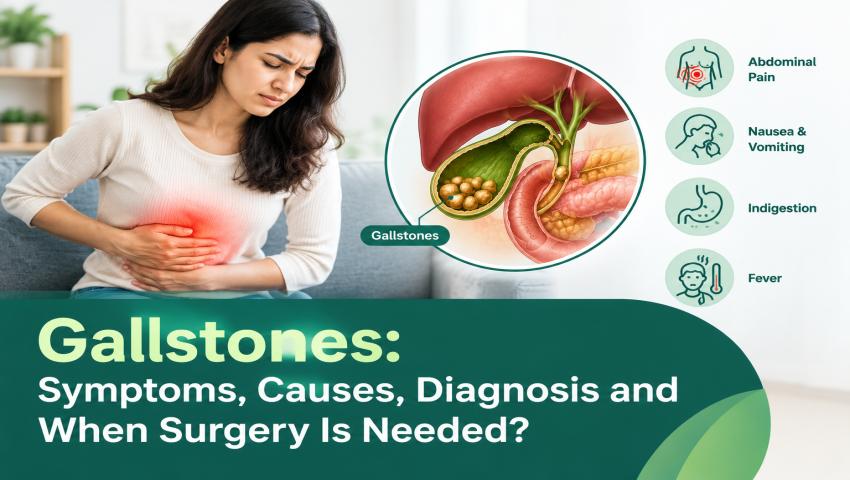
Gallstones are hard, stone-like deposits that develop inside the gallbladder.
The gallbladder is a small, pear-shaped organ located beneath the liver. Its primary function is to store and concentrate bile, a digestive fluid produced by the liver.
Gallstones can vary in size. Some may be as small as grains of sand, while others can become considerably larger.
A person may have a single gallstone or multiple stones.
What Causes Gallstones?
Gallstones usually develop when there is an imbalance in the substances that make up bile.
Several factors can increase the likelihood of developing gallstones, including:
Being overweight or obese
Rapid weight loss
Eating a diet high in unhealthy fats
Having certain metabolic conditions
Pregnancy
Increasing age
Family history of gallstones
Certain medical conditions
Some medications
Gallstones are more common in women, although men can also develop them.
What Are the Symptoms of Gallstones?
Not everyone with gallstones experiences symptoms.
When gallstones cause problems, one of the most common symptoms is biliary colic, which is typically experienced as pain in the upper right or upper middle part of the abdomen.
The pain may:
Begin suddenly
Occur after a heavy or fatty meal
Last for several minutes to a few hours
Spread toward the back or right shoulder
Be accompanied by nausea or vomiting
Some people may also experience indigestion, bloating or a feeling of fullness.
However, these symptoms can occur with many digestive conditions, so proper diagnosis is important.
When Can Gallstones Become Serious?
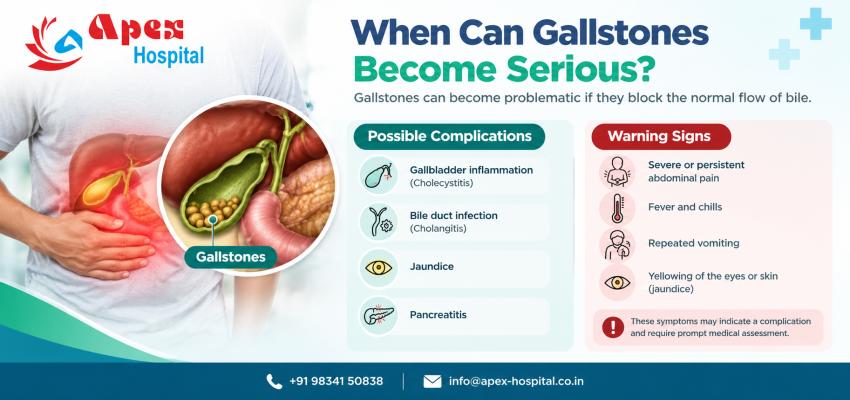
Gallstones can become problematic if they block the normal flow of bile.
A blockage can lead to complications such as:
Gallbladder inflammation
Bile duct infection
Jaundice
Pancreatitis
Severe abdominal pain
Fever and chills
Severe or persistent abdominal pain, fever, repeated vomiting or yellowing of the eyes or skin should not be ignored.
These symptoms require prompt medical assessment.
How Are Gallstones Diagnosed?
Doctors usually begin with a detailed medical history and physical examination.
An abdominal ultrasound is commonly used to detect gallstones and assess the gallbladder.
Depending on the symptoms and suspected complications, additional investigations may include blood tests, CT scans, MRI/MRCP or other specialised tests.
The choice of investigation depends on the individual patient’s condition.
Do All Gallstones Require Treatment?
No.
If gallstones are discovered incidentally and are not causing symptoms or complications, immediate treatment may not always be necessary.
However, symptomatic gallstones may require treatment to prevent recurrent attacks and complications.
Your doctor will determine the appropriate approach based on your symptoms and overall health.
When Is Surgery Recommended?
Surgery may be recommended when gallstones repeatedly cause symptoms or lead to complications. The standard surgical treatment is cholecystectomy, which involves removing the gallbladder.
In many patients, this can be performed using minimally invasive laparoscopic surgery.
Removing the gallbladder does not mean that the body can no longer digest food. Bile continues to be produced by the liver, although it is no longer stored in the gallbladder.
What Is Laparoscopic Gallbladder Surgery?
Laparoscopic surgery is a minimally invasive approach in which the surgeon uses small incisions and specialised instruments to remove the gallbladder.
Compared with traditional open surgery, minimally invasive surgery may offer benefits such as smaller incisions, less postoperative discomfort and a potentially quicker recovery, although recovery varies from patient to patient.
The surgeon will determine the most appropriate surgical approach based on the individual’s medical condition.
Can Gallstones Be Prevented?
Not all gallstones can be prevented, but maintaining a healthy lifestyle may help reduce certain risk factors.
Helpful habits include:
Maintaining a healthy weight
Avoiding crash diets and rapid weight loss
Eating a balanced diet
Including adequate fibre
Limiting excessive unhealthy fats
Staying physically active
Managing conditions such as diabetes and abnormal cholesterol
If you have previously experienced gallstone-related symptoms, follow-up with your doctor can help prevent complications.
When Should You Consult a Doctor?
You should seek medical evaluation if you experience repeated upper abdominal pain, especially after meals, or symptoms such as vomiting, fever, jaundice or persistent digestive discomfort.
Do not assume that recurring pain is simply acidity or indigestion.
At Apex Hospital, patients can access evaluation and treatment for a wide range of gastrointestinal and surgical conditions, supported by its Gastroenterology and General Surgery services. The hospital provides multidisciplinary care under one roof.
Conclusion:
Gallstones can remain silent for years, but when they begin causing symptoms, they should not be ignored.
Early evaluation can help identify gallstones and determine whether observation, medical management or surgery is appropriate.
If you experience recurrent upper abdominal pain, particularly after meals, consult a healthcare professional for proper diagnosis rather than relying on self-medication.
With timely evaluation and appropriate treatment, most patients with symptomatic gallstones can receive effective relief and return to their normal activities.